



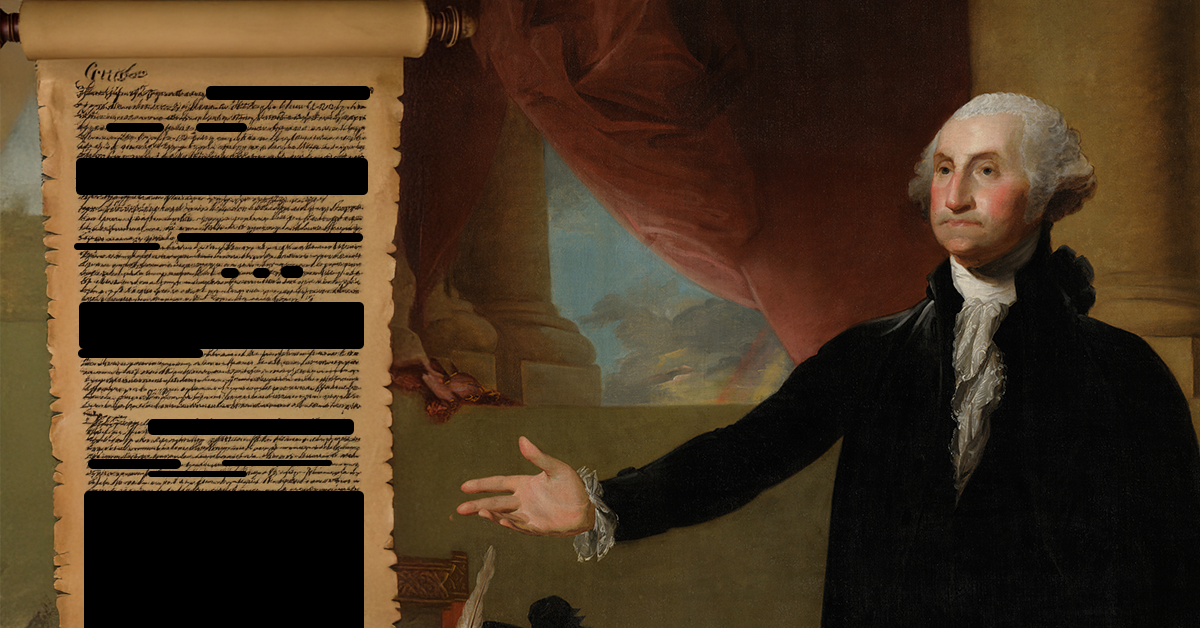
UFO Disclosure, we are told, is always just around the corner. So why hasn’t it happened yet? What is the big hold up?
As an attorney, I made it my mission to get to the bottom of the legal issues that seem to be at the center of this. What I found shocked even me.

DISCLAIMER: This is not legal advice, you are not my client, and I don’t practice this kind of law.
TLDR: Because of some questionable Supreme Court decisions, the Executive Branch can legally hide things from Congress. Forever. As a result, the Disclosure Act will not get us over the finish line. But all is not lost. I’ve identified two legally valid paths to disclosure, one of which can be implemented immediately by Congress.
What is the hold up?
A large number of people have come forward wanting to tell the public what they know regarding secret government programs about UFOs. Not only now, but also periodically throughout the last 70 years, individuals have come forward and asked to have the gag removed from their mouths. Some of them, typically lower level in the organization, have illegally spilled the beans. But we have yet to get full disclosure from anyone with a broad perspective of all that the government is hiding on this topic.
Obviously, something is preventing these people from saying what they want to say. But if we can’t even pinpoint what that something is, we’ll never get anywhere.
And that is what they are using against us.

The government secret keepers have deployed a wide range of weapons against the disclosure movement, but this is the most effective. It’s like we’re blindfolded, swinging a wooden stick at a pinata. The pinata spins all around us, bouncing off our glancing blows as we flail around like a confused child.
We’re never getting that candy, folks. Not this way.
Taking off the mask is essential. So we have to find a way to see past all the distractions and laser focus on what matters:
The law.
The law is what really matters. Boring, I know. But stay with me here.
These whistleblowers, almost to a man, tell us there are things they wish they could disclose – but can’t. They are scared of the consequences of saying what they know. And they have good reason to be.
There is a documented history of murder, torture, and exile for those who choose their moral principles over following the law.
_Minds/11412.jpeg)
Some will look at this situation and place the burden on the whistleblower. “Make the sacrifice for the greater good,” they say.
But it isn’t quite that simple. Suppose, for example, that no one believes the whistleblower. In that case, they have made themselves a sacrifice for nothing.
Americans have a long history of hanging our heroes out to dry. Perhaps if we followed a different course with whistleblowers of the past, they would be more emboldened now. But who wants to suffer and sacrifice for an ungrateful public?

No, we can’t simply wait for someone to do the right thing at their own expense. That is not a reasonable plan.
What we need is to compel full government disclosure – not with hopes or moral peer pressure, but with laws and statutes.
That’s the approach lawmakers have been following for several years now. But has it worked?
Not really.
Lessons from 2022-2024
In the 2023 NDAA, which is a massive law designed to cover a wide variety of defense-focused government functions, Congress established AARO. AARO was imbued with awesome powers of investigation as a means to get to the highly classified UFO secrets and to reveal them to Congress.
Congress tasked AARO not only with reporting on current events, but also with providing them a “historical record of the United States Government relating to unidentified anomalous phenomena” going back to January 1, 1945. ***
AARO was established by law, voted on and passed by the highest authorities in our government. But as AARO dragged their feet on revealing anything useful, people began to wonder if Congress had crossed all their “t”s and dotted all their “i”s. That is to say, maybe they didn’t delegate the proper authorities to AARO.
The theory goes like this: If the Pentagon interprets the law in a certain way, they might assert that AARO has Title 10 authority but not Title 50 authority. If so, any programs organized under Title 50 authority would be able to withhold classified information from AARO.

This particular concern prompted a cadre of Senators to issue a letter in February 2023 to the Deputy Secretary of Defense and the Principal Deputy Director of National Intelligence, which instructed, in part, for them to give the Director of AARO Title 50 authority:
“In addition to securing necessary funding, we request a briefing from your offices on your agencies’ plan to implement the dual reporting of AARO to the leadership of the Department of Defense and the Intelligence Community. The FY23 Intelligence Authorization Act (IAA) requires that the Director of AARO report directly to the Deputy Secretary of Defense and the Principal Deputy Director of National Intelligence, with administrative support provided by the Undersecretary of Defense for Intelligence and Security. The briefing should cover the balance between Intelligence Community and Department of Defense involvement, including how Title 10 and Title 50 authorities will be delegated to, and exercised by, the Director of AARO.”
Among the Senators who signed the letter were both the Chairman and the Vice Chairman of the US Senate Select Committee on Intelligence. That committee is important because it is imbued with immense authority by Congress to oversee the most critical questions of national security and government secrecy.

So did it work? Was this the missing ingredient to disclosure?
In March 2024, the Pentagon put that question to rest:
Responding to questions from The Debrief, Pentagon spokesperson Susan Gough clarified that AARO does have access to U.S. intelligence information that falls under Title 50 authority.
“There is no impediment to AARO receiving all UAP-related information, past or present, regardless of level or origin of classification,” Gough told The Debrief. “By law, AARO may receive all UAP-related information, at all levels of classification, regardless of whether the original classification authority for such information is within DoD or the Intelligence Community.”
In an ABC News interview with Sean Kirkpatrick, then Director of AARO, the narrator told us of Sean:
He downplayed the possible existence of a secret program that he is not privy to, saying, “Nothing has been denied us.”
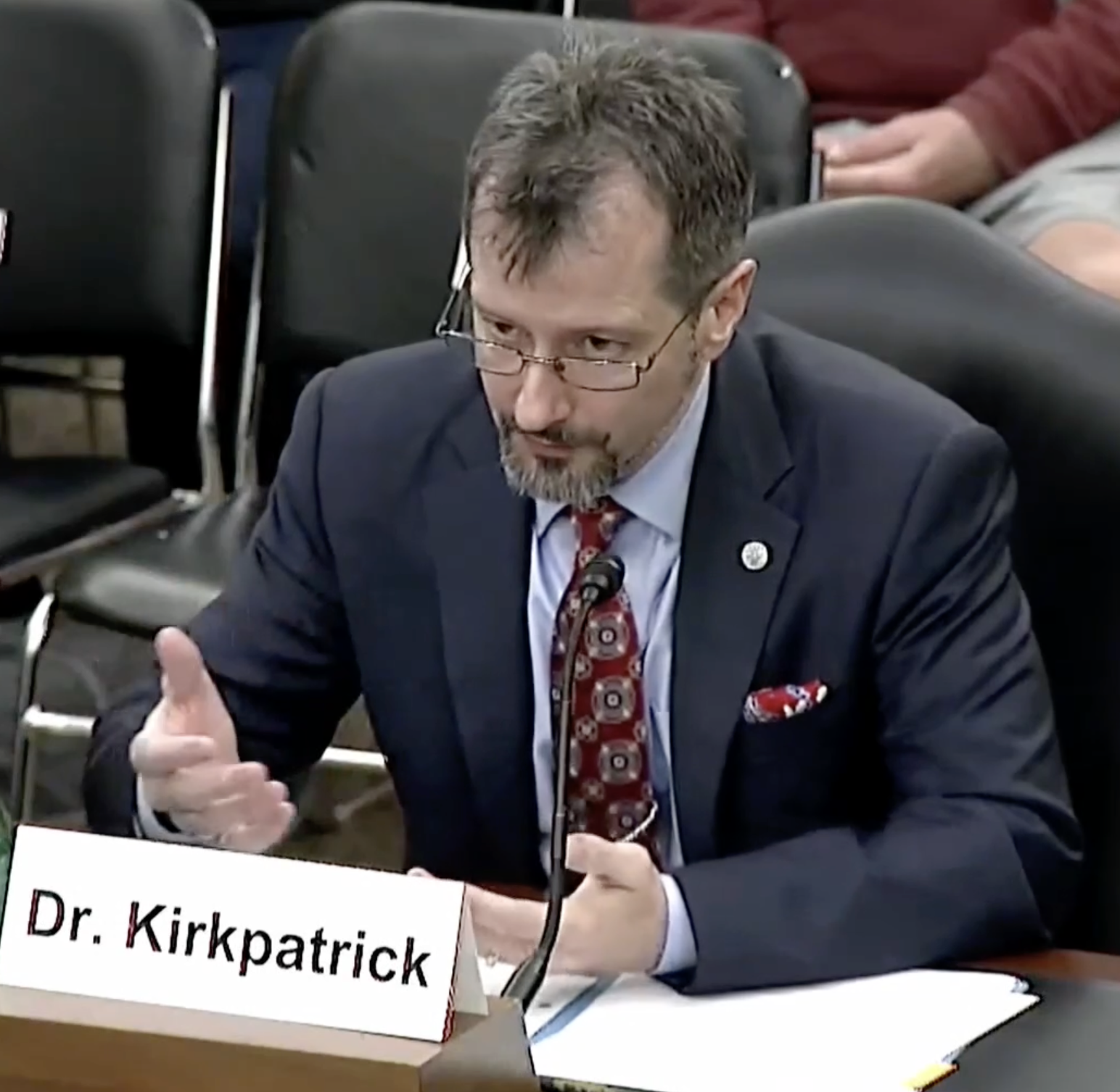
So lets put the pieces together. Congress is the most powerful branch of Government. They write the laws which the Executive branch must execute. And this law required AARO to put together one heck of an interesting history book. The law also granted AARO sweeping powers of investigation, with nothing legally beyond their grasp. Between Title 10 and Title 50, that should be everything. A veritable skeleton key to the secrets of America.
But when Kirkpatrick released the public version of AARO’s Historical Report, it was a real stinker. Mostly gross propaganda and obvious lies. Totally dismissive and insulting to everyone involved.
What went wrong?

A Major Clue
There is a theory that Congress made a Constitutional oopsie when they passed the Atomic Energy Act, accidentally giving away their power of oversight. According to this theory, the whole of Congress could demand access to information in the form of a clearly worded law, passed and signed by the President, and the Department of Energy could still legally deny it to them. This completely undermines the system of checks and balances outlined in the Constitution. But a law is a law, and unless the Supreme Court overturns it, the Atomic Energy Act is considered legally valid by the law enforcers. So does the AEA permit this kind of behavior by the Department of Energy?
Maybe.
The AEA established the concept of RD or Restricted Data, which is top-secret data of a certain type, and it placed authority over that data with the Department of Energy. Now let’s turn to the established rules regarding RD:
Restricted Data
The exact text of the Atomic Energy Act can be found here. It is a 371-page monster of a bill which addresses Restricted Data starting on page 183. We won’t be digging into the details of that law and the wording — both for brevity’s sake and also because it is largely irrelevant. What matters most is how the government has interpreted this law. Most laws set broad policies and it is up to federal agencies to translate that into specific rules. We find these rules in the CFR (Code of Federal Regulations).

From the CFR, 10 CFR Part 1045, Summary and Section I. A. (emphasis added):
In this final rule, the Department of Energy (DOE) revises its regulations concerning the requirements for classification and declassification of Restricted Data (RD) and Formerly Restricted Data (FRD).
…
The Atomic Energy Act of 1954, as amended, 42 U.S.C. 2011 et seq. (AEA), is the basis for the classification of nuclear-weapons related information as Restricted Data (RD), and information transclassified from the RD category. The AEA grants the Department of Energy (DOE) Government-wide authority for RD and the control of information as RD. Title 10 of the Code of Federal Regulations (CFR) part 1045 (this part) implements DOE authority under the AEA to manage the Government-wide system of classifying and declassifying RD.
There it is. Government-wide authority.
Government-wide authority is no joke. I can see how someone could read that and decide that it authorizes (or even compels) them to hide information – even from Congress. Congress is a part of the government, after all, and this rule gives the Department of Energy government-wide authority in this matter.
So how can AARO have access to Title 10 and Title 50, yet still be unable to get at the good stuff? Because, according to the Atomic Energy Act, Restricted Data doesn’t fall under either authority.

Theory vs. Practice
In a famous historical exchange, the Roman General Pompey issued this threat, “Will you not give up reading laws to us men girt with swords?”
To put it another way – violence is the source of government power, not words on paper.
Hand-wringing about Title 10, 50, and Restricted Data definitions doesn’t tell the whole story of how Washington works. Steeped in the traditions of the past, and bolstered by Supreme Court decisions, the President is very comfortable placing himself as a unilateral authority on government secrets. As described in Congress’ own publication the CRS (Congressional Research Service) on page 4:
Citing the President’s constitutional role as commander in chief, the Supreme Court has repeatedly stated in dicta (i.e., language that does not constitute a legal determination) that “[the President’s] authority to classify and control access to information bearing on national security . . . flows primarily from this Constitutional investment of power in the President and exists quite apart from any explicit congressional grant.” This language has been interpreted to indicate that the President has plenary authority to control classified information.
Plenary authority means complete authority. In other words, based on both history and Supreme Court insinuation, the President is the ultimate authority over classified information.
We could dive deeper into the ins and outs of Congressional authority regarding Executive secrecy because it is not a simple matter to summarize. But the upshot is that the system, as it is currently designed, allows for one man to stand between the public and full disclosure. Congress, it turns out, is not the most powerful branch of government. The Executive is.
This may be why Ivan Hannel, attorney for the famous disclosure advocate Louis Elizondo, said this on X referring to what Lue can legally tell Congress in a SCIF (a highly secure environment for discussing classified information):
“Mr. Elizondo can only disclose what has been approved by the Executive Branch”
and
“I emphasized that I would only advise Mr. Elizondo to tell the truth, within the limits of his Executive Branch permissions.”
Next Steps for the UFO Disclosure Movement
So, then, we just have to elect the right guy, right?
Wrong.
Americans did that already and it didn’t work.

Jimmy Carter, the 39th President, was elected with a mandate to pull back the curtain on UFO activity. He was, himself, a UFO eyewitness who publicly called for disclosure. But once elected, he neglected that promise. Since then, several Presidents have publicly indicated that they were unable to acquire these secrets even for themselves.
But how can that be? If the President has plenary authority, how can he be denied access?
Two words: Restricted Data (RD). Remember our discussion of the Atomic Energy Act:
The AEA grants the Department of Energy (DOE) Government-wide authority for RD and the control of information as RD.
If the Department of Energy has government-wide authority, that may be interpreted as authority even over the President.
This is supported by another provision in the CFR that discusses the declassification of government records. From 36 CFR § 1260.28 (emphasis added):
Only designated officials within the Department of Energy (DOE) may declassify Restricted Data (RD) (as defined by the Atomic Energy Act of 1954, as amended). The declassification of Formerly Restricted Data (FRD) (as defined in 10 CFR 1045.3) may only be performed after designated officials within DOE, in conjunction with designated officials within DOD, have determined that the FRD marking may be removed. Declassification of Transclassified Foreign Nuclear Information (TFNI) (as defined in 32 CFR 2001.24(i)) may be performed only by designated officials within DOE.
The Department of Justice, similarly wrote on their FAQ:
Only designated officials within the Department of Energy (DOE) may declassify RD/FRD records. Any record determined to contain RD/FRD may not be reviewed for declassification of national security information until the Secretary of Energy, or the Secretary of Energy in conjunction with the Secretary of Defense for FRD, has determined that the RD/FRD markings may be removed.
In addition, the American Bar Association specifically addressed the powers of the President when they point out that:
Some secrets, such as information related to nuclear weapons, are handled separately under a specific statutory scheme that Congress has adopted under the Atomic Energy Act. Those secrets cannot be automatically declassified by the president alone and require, by law, extensive consultation with executive branch agencies.
The Problem: A Summary
Now that we’ve covered the legal history, let me briefly summarize the birds-eye view of this two-fold problem:
- The President can withhold secrets from Congress regardless of whatever laws Congress has passed to get at those secrets.
- The DOE can withhold secrets from both the President and Congress under the Atomic Energy Act.
So where does that leave us citizens? How do we take back the our government?
The Conventional Path
The logical first step is to amend the Atomic Energy Act. This is within the power of Congress and could yield immediate benefits. If the President is truly in the dark because the DOE is hiding information, amending this law could make sure that our President, and every President, gets the full briefing.
But that doesn’t necessarily mean he or she will see fit to share it with the rest of us. If the Disclosure Act passes, it changes nothing about the Presidential plenary power because it lacks the authority to do so.
So, legally speaking, if you are brought before Congress and sworn to tell the truth, but the information you have is classified by the President, you may not have an option. You may be required by law to lie to Congress and the American people.
Now maybe that is a misreading of the law. I sure hope so. I think we can at least consider this a legal gray area. Though maybe a specialist in this area of law can set me straight.
What we do know is that James Clapper, Director of National Intelligence (Executive branch) lied to Congress about mass surveillance at the NSA. He was not punished – but the guy who exposed the lie (Edward Snowden) was forced into exile by threats of prison.
During the Lois Lerner investigation, the IRS (Executive branch) stalled Congress while they literally destroyed evidence. No criminal charges were filed.
Testifying in June 2015, the IRS Deputy Inspector General Timothy P. Camus said that 424 back-up tapes, most likely to have contained the missing emails, were erased in March 2014—a month after the IRS said it realized it was missing some of Lerner’s emails because of a hard-drive crash, and although the emails were then under subpoena from the Oversight Committee.
This brings us back to the “men girt with swords” conundrum. The Executive branch has proven that they can defy Congress so long as they circle the wagons and give each other cover. Lerner proved that and Comey proved that. If you are ordered by the President to lie to Congress, maybe legal interpretation becomes less important to you than the question of which side can actually protect you. So, naturally, you go with the side that has guns.
Now suppose we pass the UAPDA into law. If the Executive branch simply refused to play ball, that would be quite obvious. The American people would pick up on that and demand transparency by other means. But that’s not likely to happen.
If past coverups are any indication, we are more likely to see a performative fulfillment of the Act. A committee will be adjourned and conduct an investigation. Typically, whoever they put in charge of the committee will steer it along the tracks laid out by the Executive. It’s a well-established formula because it works.
That is why we need to go a step further and seal off every other escape hatch. Congress, together with the states, have the ultimate trump card when it comes to law. But it’s difficult. What we need is a constitutional amendment. Using that tool, the people can override this draconian scheme and restore the power of oversight to Congress where it rightly belongs.
With a constitutional amendment, the people can override the Supreme Court’s former judgments and insist that Congress have supreme authority over government secrets – even those kept by the President and/or the DOE.
That is a clear path to getting this information to Congress. From there, we’ll be able to compel them to release it to the rest of us or craft legislation to that effect.
Alternatively, we could design the amendment to not only reveal the secrets to Congress, but also compel Congress to release it to the people.
That is how the passage of a single constitutional amendment could get us full disclosure.
But that’s not the path I advocate.
The Daring Path
Congress has a faster way. A standalone law which could blow the lid off this whole thing. But only if they have the guts to do so.
Rather than trying to squeeze disclosure through these official channels, they should let it come out naturally in a decentralized way. Let the whistleblowers speak without fear of retribution.
All the criminal punishments for revealing classified data are the result of Congressional laws, and Congress has authority to repeal them or to make an exception. So I propose we carve out a massive exception for anything that touches this subject. Free the civil servants who want to reveal what they know. When the goods are on full display, the government gatekeepers will have no reason left to gatekeep.
Is it drastic? Sure. Is it reckless? Maybe. But if they wanted to do this the proper way, they shouldn’t have jerked our chains for all these years.
In a separate article I will make the case that a history of federal suppression of information, sometimes using coercion and sometimes using violence, calls for such a bold approach.
But I think it is really important to note that for some, time really is of the essence. There are men and women who have been born, grown old, and died – longing to know the truth about their sightings and encounters. It isn’t right.
Even now we have elderly people asking for answers, and I don’t think we should keep them waiting.
To this end, I’ve written a law. Four pages long, but robust in its protections.
In a nutshell, it says that if you have info about non-human intelligence or about humans of unusual origin – you are free to share that info with the people. It’s like a general pardon for any violation that might prevent someone from sharing what they know. It also provides protections against other forms of retaliation from the Executive branch.
Take it. Improve it. Pass it.
Heck, put your own name on it. I’m not asking for credit here.
But be very careful with any amendments to it. One trick that government likes to play on the people is to pass laws with “poison pills” – insertions that deliberately undermine the stated purpose of the law. We must be on guard and insist that our advocacy will not end until our law is passed without poison pills and without undermining edits.
Without further comment, I present The GRAYS Act:
The Governmental Release and Access to Yesterday’s Secrets Act
 Loading...

 Reload document
  Open in new tab
Emergency Backups
**This page may be taken down, but these backups are maintained in a decentralized way by Arweave and should remain valid in perpetuity:
Backup Link 1: The GRAYS Act in docx format
Backup Link 2: The GRAYS Act in pdf format
Backup Link 3: The UFO Disclosure Fight in Washington – A Lawyer Breaks It Down
Permanent Identifier: ZUT6FWZhUOlYlAAT2Au5fgXGBXwgU18G_2YCP6s-5go


Derek is a licensed attorney with a keen interest in avoiding catastrophe. Hope for the best, prepare for the worst.